
Custom Web Application Developmentin 2026: Cost, Benefits & Process
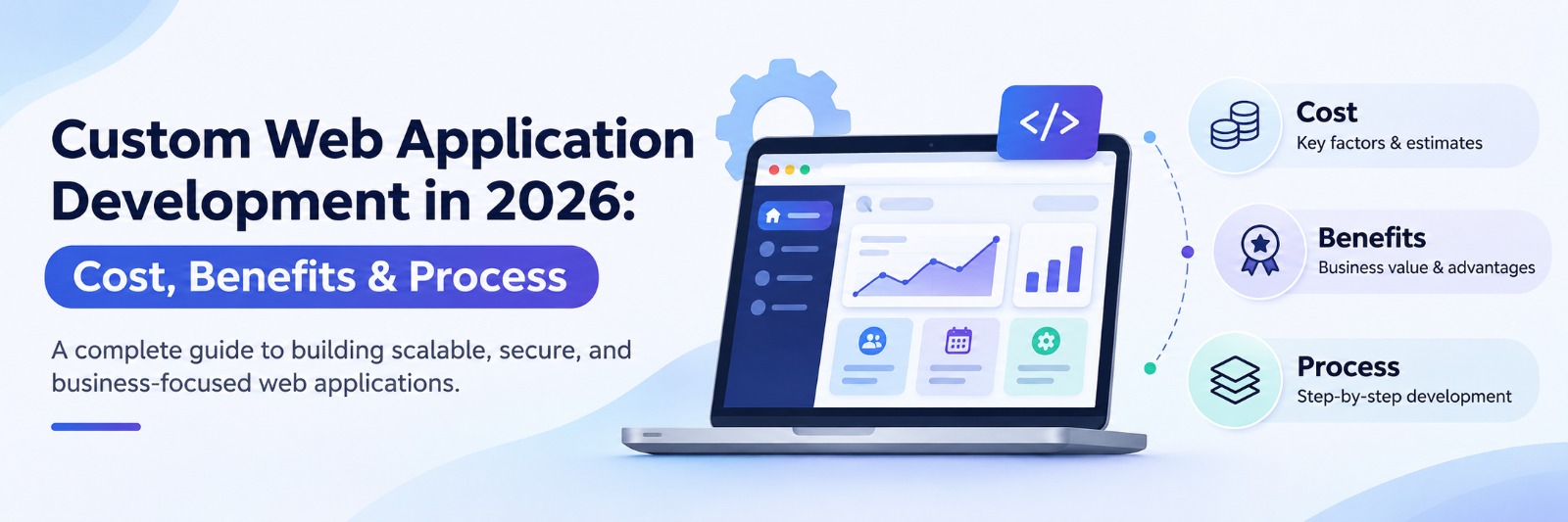
Businesses in 2026 are increasingly adopting digital solutions to improve operations, enhance customer experiences, and stay competitive. Traditional websites and ready-made software may work for basic requirements, but growing businesses often need more flexible and scalable solutions. This is where Custom Web Application Development becomes important.
A custom web application is designed specifically around a business’s requirements, workflows, and long-term objectives. From customer portals and booking platforms to enterprise management systems and SaaS products, custom applications help businesses streamline processes and deliver better digital experiences.
In this guide, we will explore custom web development, its benefits, development processes, estimated costs, and emerging technology trends in 2026.
What Is Custom Web Application Development?
Custom Web Application Development is the process of designing and building web-based software tailored to specific business needs. Unlike ready-made platforms, custom applications are developed with features, functionality, integrations, and user experiences that align with an organisation’s requirements.
These applications run through web browsers, allowing users to access them across different devices without necessarily installing separate software.
Some common examples include:
- Customer Relationship Management (CRM) systems
- Online booking and appointment platforms
- E-commerce management applications
- Employee management portals
- SaaS-based business solutions
- Inventory and order management systems
- Customer dashboards and analytics platforms
Professional web application development services help businesses transform their ideas into secure, functional, and scalable digital products.

Key Benefits of Custom Web Application Development
Investing in custom web development offers several advantages, particularly for businesses with specific operational requirements.
1. Tailored Business Functionality
Every business operates differently. Custom applications are developed around your existing workflows, ensuring that the features directly support your business objectives. You can include only the functionality you need instead of adjusting your operations to fit a pre-built solution.
2. Improved Scalability
As businesses grow, their digital requirements change. Custom applications can be designed to support additional users, features, integrations, and increased workloads. This makes them a suitable long-term investment for growing organisations.
3. Enhanced Security
Security is a critical consideration for applications that handle customer information, business data, and online transactions. Custom development allows businesses to implement appropriate security measures, including data encryption, role-based access, secure authentication, and regular security updates.
4. Better User Experience
A well-designed application makes it easier for users to complete tasks and navigate different features. Custom UI/UX design ensures that the interface is intuitive, responsive, and aligned with user expectations.
5. Seamless Third-Party Integrations
Businesses often rely on multiple digital tools. Custom applications can integrate with payment gateways, CRM platforms, accounting software, marketing tools, APIs, and other business systems to create a connected digital ecosystem.
6. Greater Control and Flexibility
Unlike many ready-made platforms, custom applications offer greater control over functionality, design, integrations, and future improvements. Businesses can modify and enhance their applications as their requirements evolve.
Custom Web Application Development Process
Building a successful web application requires proper planning, technical expertise, and continuous testing. A structured development process helps ensure that the final product meets business expectations.
Step 1: Requirement Analysis and Planning
The first stage involves understanding business objectives, target audiences, project requirements, and expected functionality. The development team identifies essential features, technical requirements, project scope, and timelines before moving forward.
Step 2: UI/UX Design and Prototyping
The next step is designing the application’s user interface and experience. Designers create wireframes, prototypes, navigation structures, and visual layouts to establish how users will interact with the application. Tools such as Figma help teams visualise the application before development begins.
Step 3: Frontend and Backend Development
Development involves two major components:
- Frontend Development: Focuses on the visual interface, responsiveness, navigation, and user interactions.
- Backend Development: Handles server-side operations, databases, authentication, business logic, and APIs.
Both components work together to deliver a functional web application.
Step 4: Database and API Integration
The application is connected to databases and external services required for its functionality. This may include payment systems, email services, CRM platforms, analytics tools, and other third-party integrations.
Step 5: Testing and Quality Assurance
Before launch, the application undergoes comprehensive testing to identify bugs and performance issues. Testing includes functionality, usability, responsiveness, compatibility, security, and performance checks.
Step 6: Deployment and Ongoing Maintenance
Once testing is complete, the application is deployed to a suitable hosting or cloud environment. Regular maintenance, security updates, performance monitoring, and feature enhancements help ensure long-term reliability.
How Much Does Custom Web Application Development Cost in 2026?
The cost of custom web application development depends on project complexity, features, design requirements, technology stack, integrations, and development timelines.
Here is an indicative cost breakdown for businesses planning a custom application in 2026.
| Application Type | Estimated Cost |
| Basic Web Application | ₹50,000 – ₹1,50,000 |
| Business Web Application | ₹1,50,000 – ₹4,00,000 |
| Advanced Web Application | ₹4,00,000 – ₹10,00,000 |
| Enterprise-Level Application | ₹10,00,000+ |
Note: These are indicative planning estimates, not fixed market rates. Actual project costs depend on the scope, development team, infrastructure, and required functionality.
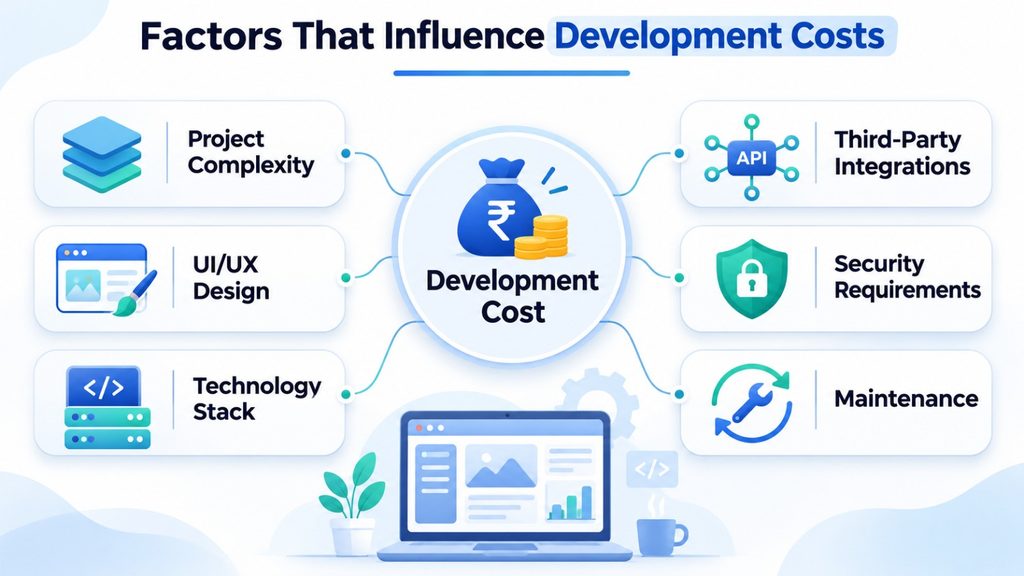
Factors That Influence Development Costs
- Project Complexity: Advanced features and business logic require additional development time.
- UI/UX Design: Custom interfaces and detailed user experiences influence design costs.
- Technology Stack: The selected programming languages, frameworks, and infrastructure affect development requirements.
- Third-Party Integrations: Payment gateways, APIs, and external platforms can increase project complexity.
- Security Requirements: Applications handling sensitive business information may require additional security measures.
- Maintenance: Ongoing updates, hosting, monitoring, and technical support contribute to long-term costs.
Businesses should evaluate the total cost of ownership rather than focusing only on the initial development investment.
Best Technologies for Custom Web Development in 2026
Choosing the right technology stack is essential for building a reliable, secure, and scalable application.
Frontend Technologies: React.js; Next.js; Vue.js; HTML5; CSS3; JavaScript
Backend Technologies: Node.js; Python; PHP; Laravel; Java
Database Technologies: MySQL; PostgreSQL; MongoDB; Firebase
Cloud and Deployment: AWS; Microsoft Azure; Google Cloud; Docker
The ideal technology stack depends on application requirements, scalability expectations, security needs, and available development expertise.
AI Trends Transforming Web Application Development in 2026
Artificial Intelligence is becoming an important part of modern web application development. Businesses are increasingly integrating AI-powered capabilities to improve automation, personalisation, and operational efficiency.
1. AI-Powered Chatbots
Intelligent chatbots help businesses handle customer queries, provide instant responses, and improve customer support.
2. Personalised User Experiences
AI analyses user behaviour and preferences to deliver personalised content, product recommendations, and experiences.
3. Workflow Automation
AI-powered automation reduces repetitive manual tasks, helping businesses improve productivity.
4. Predictive Analytics
Businesses can use AI to analyse historical data, identify patterns, and support better decision-making.
5. Intelligent Search
AI-powered search features help users find relevant information more efficiently through contextual and natural-language queries.
Integrating AI into custom web development services can help businesses build smarter applications that adapt to changing user expectations.
Custom Web Application vs Ready-Made Software: Which Is Better?
Both solutions have their advantages, but the right choice depends on business requirements.
| Comparison | Custom Web Application | Ready-Made Software |
| Functionality | Business-specific | Predefined features |
| Flexibility | Highly flexible | Limited customisation |
| Scalability | Designed around growth needs | Depends on the provider |
| Initial Cost | Generally higher | Generally lower |
| Integrations | Tailored integrations | Available integrations |
| Ownership and Control | Greater control over development | Depends on licensing |
If your business requires unique functionality, specialised workflows, or long-term scalability, a custom application may be the better investment. For basic requirements, ready-made software can be a practical starting point.
Why Choose Professional Custom Web Application Development Services?
Developing a successful application requires more than writing code. It involves understanding business goals, designing user-friendly interfaces, selecting the right technologies, and ensuring reliable performance.
A professional development partner can help you with:
- Business requirement analysis and technical planning
- Custom UI/UX design and prototyping
- Frontend and backend development
- Database architecture and API integration
- Application testing and quality assurance
- Deployment, maintenance, and technical support
Working with an experienced team helps reduce development risks and ensures that your application is aligned with your business objectives.

Conclusion
Custom Web Application Development is a valuable investment for businesses looking to improve operational efficiency, deliver better customer experiences, and build scalable digital solutions in 2026.
From initial planning and UI/UX design to development, testing, and deployment, every stage plays an important role in creating a successful application.
Whether you are a startup developing your first digital product or an established business upgrading existing systems, choosing the right development strategy can help you achieve sustainable growth.
Looking to build a custom web application for your business?
At Pinakin Design Studio Private Limited, we help businesses transform ideas into functional, user-friendly, and scalable digital experiences through UI/UX design, web development, and technology-driven solutions.
Visit https://pinakindesignstudio.in/ to discuss your next digital project.
Frequently Asked Questions (FAQs)
1. What is custom web application development?
It is the process of creating web-based software specifically designed to meet a business’s unique requirements, workflows, and functionality needs.
2. How much does custom web application development cost in 2026?
The cost can range from approximately ₹50,000 for basic applications to ₹10 lakh or more for complex enterprise-level solutions, depending on features and technical requirements.
3. How long does it take to develop a custom web application?
A basic application may take 4–8 weeks, while a medium-sized project may require 2–4 months. Complex enterprise applications can take 6 months or longer.
4. Which technologies are best for custom web development?
Popular choices include React.js, Next.js, Node.js, Python, PHP, Laravel, MySQL, and PostgreSQL. The selection depends on the project’s requirements.
5. Is custom web application development suitable for startups?
Yes. Startups can build applications around their business models, launch an MVP, validate their ideas, and gradually introduce advanced features as they grow.
6. Can AI be integrated into a custom web application?
Yes. AI can be integrated for chatbots, predictive analytics, personalised recommendations, intelligent search, and workflow automation.
7. Do custom web applications require regular maintenance?
Yes. Regular maintenance is important for security updates, bug fixes, performance optimisation, compatibility, and new feature development.
SEO Publishing Recommendations
| SEO Element | Recommendation |
| Primary keyword | Custom Web Application Development |
| Keyword placement | H1, introduction, one H2, conclusion |
| URL | /blog/custom-web-application-development-guide/ |
| Internal links | Web Development, UI/UX Design, Contact Us |
| External links | React, Next.js, AWS official documentation |
| Featured image alt text | Custom Web Application Development Services |
| Schema | Article + FAQPage (where eligible) |
Suggested Featured Image Direction
Use a modern technology-themed featured image showing a laptop with a web application dashboard, clean UI elements, and a subtle AI or data-analytics visual treatment. Suggested alt text: Custom Web Application Development Services.
Publishing recommendation: Add two or three relevant internal links to Pinakin Design Studio’s service pages to connect informational blog traffic with relevant service offerings.
Let’s turn your idea into a digital experience that performs.
Tell us what you’re building and we’ll help shape the right direction across design, technology, AI and growth.
Start a Project ↗